Between Rand Water’s infrastructure failures and 54-hour planned outages, thousands of Gauteng households have added a tank — and a 0.37–0.75kW booster pump to push that water into the house at usable pressure. Here’s the uncomfortable truth: the pump itself is usually fine. It’s the handful of fittings between the tank and the pump that decide whether it lasts years or months.
Where do pressure pump installations go wrong?
Almost every early pump death traces back to one of four installation shortcuts:
- Inlet starvation. The pump gets fed through a thin hose or 20mm fitting hanging off the tank’s 40mm outlet. It demands more water than the pipe can deliver, cavitates — that gravel-rattling sound — and slowly chews its own impeller.
- No dry-run protection. The tank empties mid-outage, the pump keeps running against nothing, and the mechanical seal cooks. This is the classic killer.
- No isolation valve or union. Without a valve at the tank and a union at the pump, you can’t service or swap the pump without draining thousands of litres.
- No non-return valve. Water drains back every time the pump stops, so it loses prime or short-cycles all night.
Each of these is a sub-R500 fix at install time. All of them are expensive later.
What is the correct inlet chain from tank to pump?
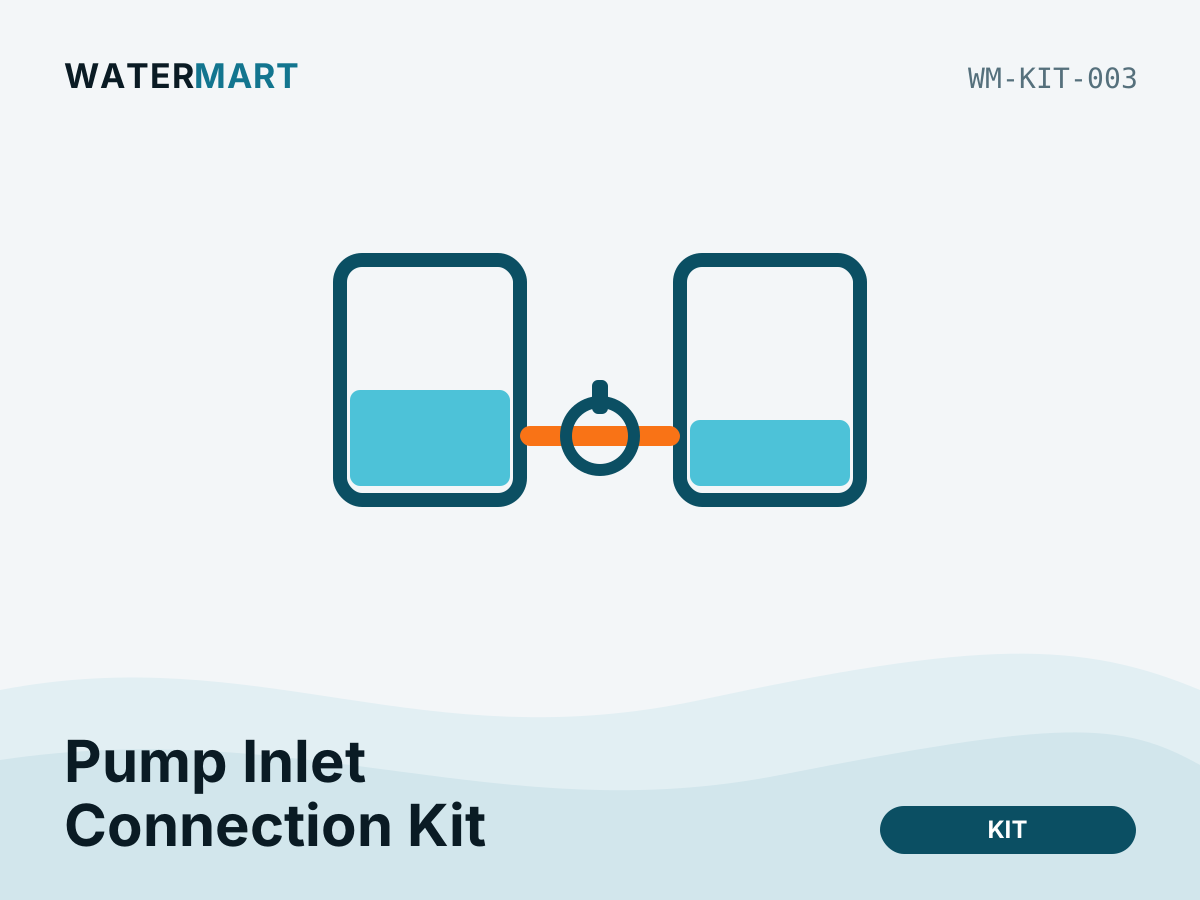
From tank wall to pump, the chain should read: 40mm outlet → isolation valve → reducer → union → pump. A standard JoJo tank has a 40mm bottom outlet, while typical household booster pumps take a 25mm BSP inlet — so you have to reduce somewhere. Do it as late as possible and keep the run full-bore for most of its length.
- Isolation valve first, right at the tank. A full-bore 40mm brass ball valve directly on the outlet lets you shut the whole system down without draining the tank. Not a thin garden tap.
- Then the reducer. Step down from 40mm to 25mm close to the pump, not at the tank.
- Union just before the pump inlet. This is what lets you unbolt the pump in five minutes instead of an afternoon.
- Keep the inlet run short, straight and slightly downhill. Every extra elbow and metre of pipe on the suction side works against the pump.
- Seal every BSP thread with PTFE tape. A pinhole air leak on the suction side causes mystery priming problems that are miserable to trace.
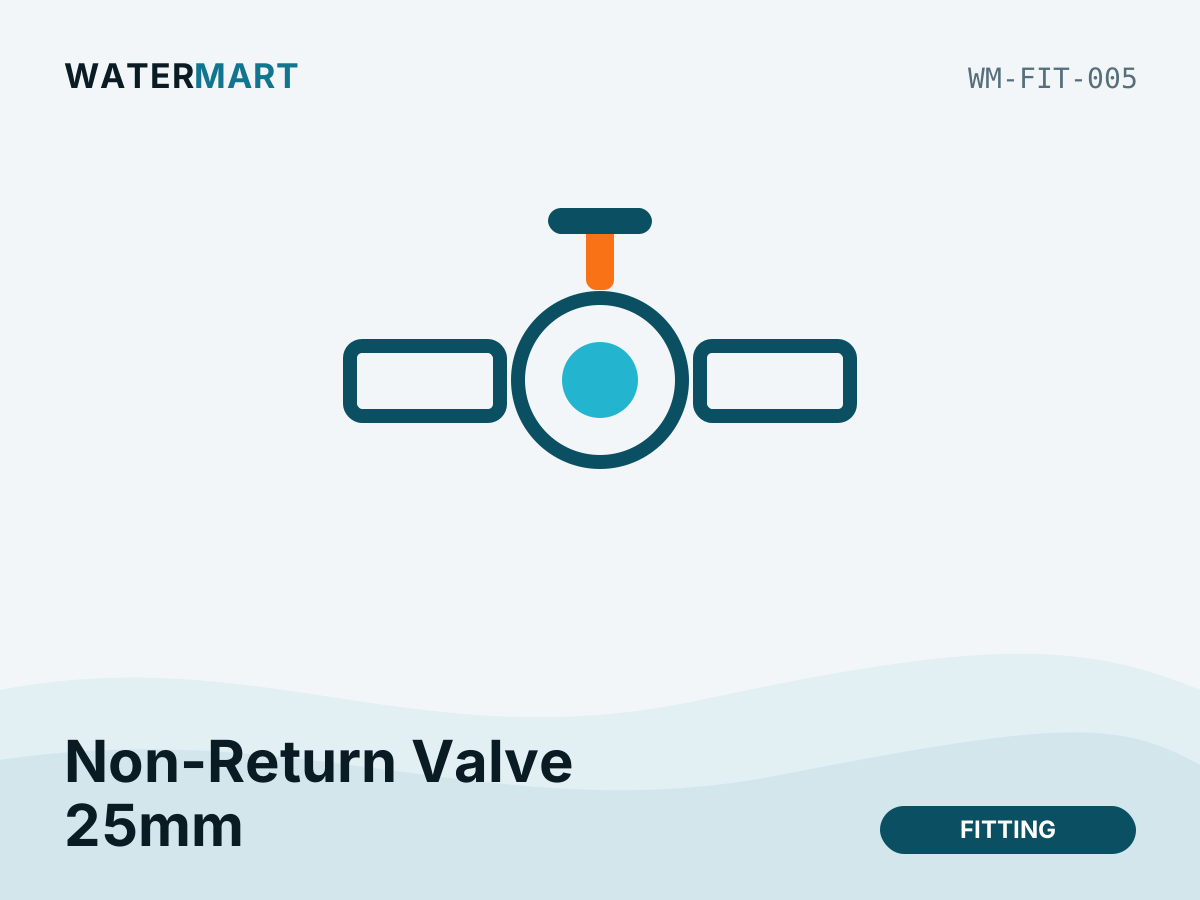
On the discharge side, fit a 25mm non-return valve so the line stays pressurised when the pump stops. If your tank also ties into the municipal supply, that non-return is non-negotiable. And if the size codes read like gibberish, don’t stress — SA tank fittings all share the same BSP thread family, so the sizes stamped on the fittings are all you need to match up.
The inlet chain, sorted
What’s the cheapest way to protect the pump from running dry?
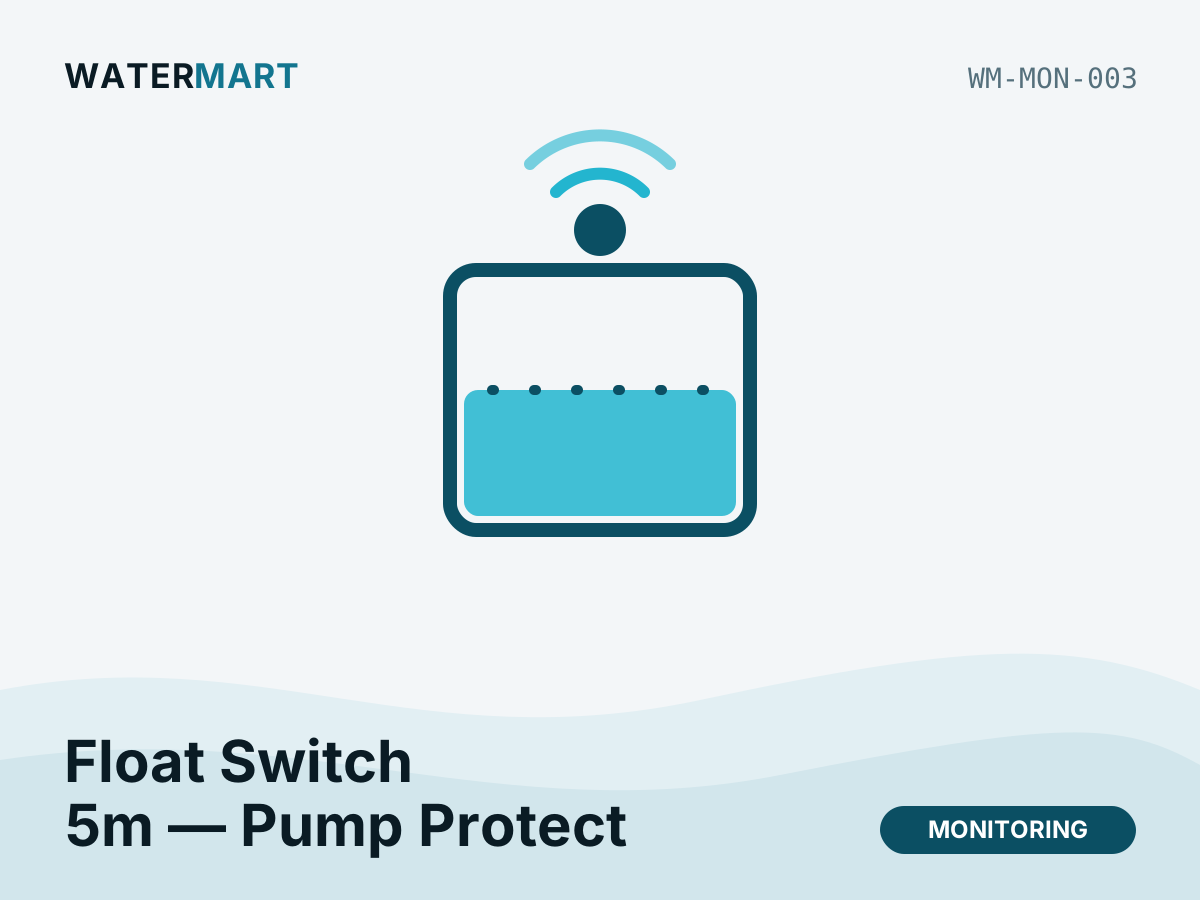
A float switch. It hangs inside the tank on its own cable, and when the water level drops near the outlet it opens the pump’s control circuit — so the pump physically cannot run dry. At R249 it’s the cheapest pump insurance you can buy, against a repair or replacement that costs many times more.
Set the trigger point a hand’s width above the outlet so the pump cuts out before it starts pulling air. A 5m cable reaches from the lid of a standard household tank to a wall-mounted pump point with room to spare.
How do I commission the pump — and what does normal look like?
- Fill the tank well above the outlet and open the isolation valve.
- Prime the pump body per the manual. Never run it dry, even “just to test”.
- Fit a pressure gauge on the discharge side where you can actually see it.
- Power on, open the furthest tap, and run it until the water flows clean and the air stops spitting.
- Close every tap and watch the gauge.
Normal looks boring: the pump builds pressure within seconds, cuts out, and the needle sits dead still with the taps closed. Open a tap and it cuts back in promptly and runs smoothly, no rattle. If the needle bleeds down overnight with everything closed, water is escaping somewhere — a dripping toilet inlet, a weeping joint, or a non-return valve that isn’t sealing.
Pump insurance for under R500
What do pump noise and constant cycling mean?
Your pump talks to you before it fails. Learn its vocabulary:
| Symptom | Likely cause | First fix |
|---|---|---|
| Gravel-rattle or growl while running | Cavitation from a starved inlet | Rebuild the inlet chain full-bore; check the isolation valve is fully open |
| Kicks in briefly with no taps open | Slow leak or passing non-return valve | Watch the gauge overnight; replace the non-return if pressure won’t hold |
| Rapid on-off clatter when a tap trickles | Controller cycling at very low flow | Common with basic controllers; open taps further, and check for partly blocked aerators |
| Runs, but weak or no pressure | Lost prime or suction-side air leak | Re-prime; re-tape the suction threads |
| Hums, then trips | Dry running or seized impeller | Kill the power; check tank level and float switch before restarting |
What maintenance does a tank booster pump need?
- Monthly: glance at the pressure gauge and listen to one start-stop cycle. A change in sound arrives before the failure does.
- Quarterly: open and close the isolation valve a few times so it never seizes, and check every joint for damp or crusty white deposits.
- Twice a year: lift the float switch by hand to confirm it still cuts the pump; clean any inlet strainer.
- Annually: crack the union, inspect the pump inlet for sediment, and flush the tank outlet.
Honest note: many booster pumps advertise built-in electronic dry-run protection, and some of it works well. But electronics can react slowly or fail exactly when the tank is empty, which is why we still fit a float switch as a dumb physical backstop. And for the wiring itself — anything beyond plugging into a weatherproof socket — use a qualified electrician. Fittings we can help with; mains electricity is not a DIY line item.
FAQ
Can I connect the pump straight to the 40mm outlet?
Physically yes — SA tank fittings all use BSP threads, so a 40→25mm reducer will mate up. But don’t skip the isolation valve and union in between. The first time you need to service the pump with a full tank behind it, you’ll understand why.
My pump has built-in dry-run protection. Do I still need a float switch?
We’d add one anyway. It’s belt and braces: R249 against the cost of replacing a cooked pump, and a float switch can’t be confused by firmware or a stuck sensor.
Why does my pump start at 2am when nobody is using water?
Pressure is leaking away somewhere and the pump tops it back up. The usual suspects are a dripping toilet inlet valve, a weeping joint or a passing non-return valve. Close everything, watch the gauge overnight, and work backwards from whether it holds. If your tank keeps overfilling too, that’s a different culprit — the float valve on the inlet side, not the pump.
Does a bigger pump need bigger fittings?
Across the typical 0.37–0.75kW household range, a 25mm inlet chain off the 40mm outlet covers almost every case. Check your pump manual for its port size before ordering — connectors come in 20, 25, 32, 40 and 50mm, so there’s a clean match either way.
WaterMart opens in August 2026 with the full inlet chain — connection kits, brass ball valves, float switches and gauge kits — couriered anywhere in South Africa for R85 flat, free over R950, all prices including VAT. Join the waitlist now and be first in line when stock lands.