Load-shedding taught Gauteng to live by a schedule, and water-shedding is fast doing the same. Rand Water’s infrastructure failures, a major pipe burst in January 2026 and publicised 54-hour planned outages across Johannesburg suburbs — with Tshwane catching its own intermittent cuts — have turned the dry tap from a surprise into a calendar entry. This checklist turns the next notice into admin instead of a crisis: the 48 hours before, the outage itself, the recovery, and the upgrades that make it permanent.
What should you do 48 hours before a planned outage?
The moment the outage notice lands, the countdown starts. Print this section and stick it on the fridge.
- Fill every tank to the brim. Open the municipal feed and let the float valve top it up overnight. If the tank stops short of full, the float valve is probably stuck or set too low — fix it now, not at hour 30 of the outage.
- Get an exact level, not a guess. Knocking on the tank wall tells you almost nothing once it’s above half. A dial gauge or WiFi sensor gives you litres, and litres are what you’ll be rationing.
- Start a bacteria test on stored water now. Home coliform and E. coli tests take 24–48 hours at room temperature — which is exactly why this is a 48-hour job and not a night-before one. If your tank water has been sitting for weeks, test it before you plan to drink it.
- Fill the indoor line-up. Kettle, biggest pots and a few clean sealed bottles for drinking; the bath or buckets for flushing and washing water.
- Rehearse the no-power scenario. If load-shedding hits mid-outage, your booster pump is dead too. Know exactly which tap still runs on gravity — and if none does, that’s upgrade number two below.
How do you make tank water last through a 54-hour outage?
Ration in priority order, and be strict about it:
- Drinking and cooking first. Sealed bottles, kept separate, never borrowed for rinsing dishes.
- Hygiene second. Jug-and-basin washes beat showers — a little water goes surprisingly far when it’s poured, not sprayed.
- Flushing last, because it’s the big spender. The cistern is the thirstiest thing in the house, and it empties fast. Flush with bucket or bath water, and only when you must.
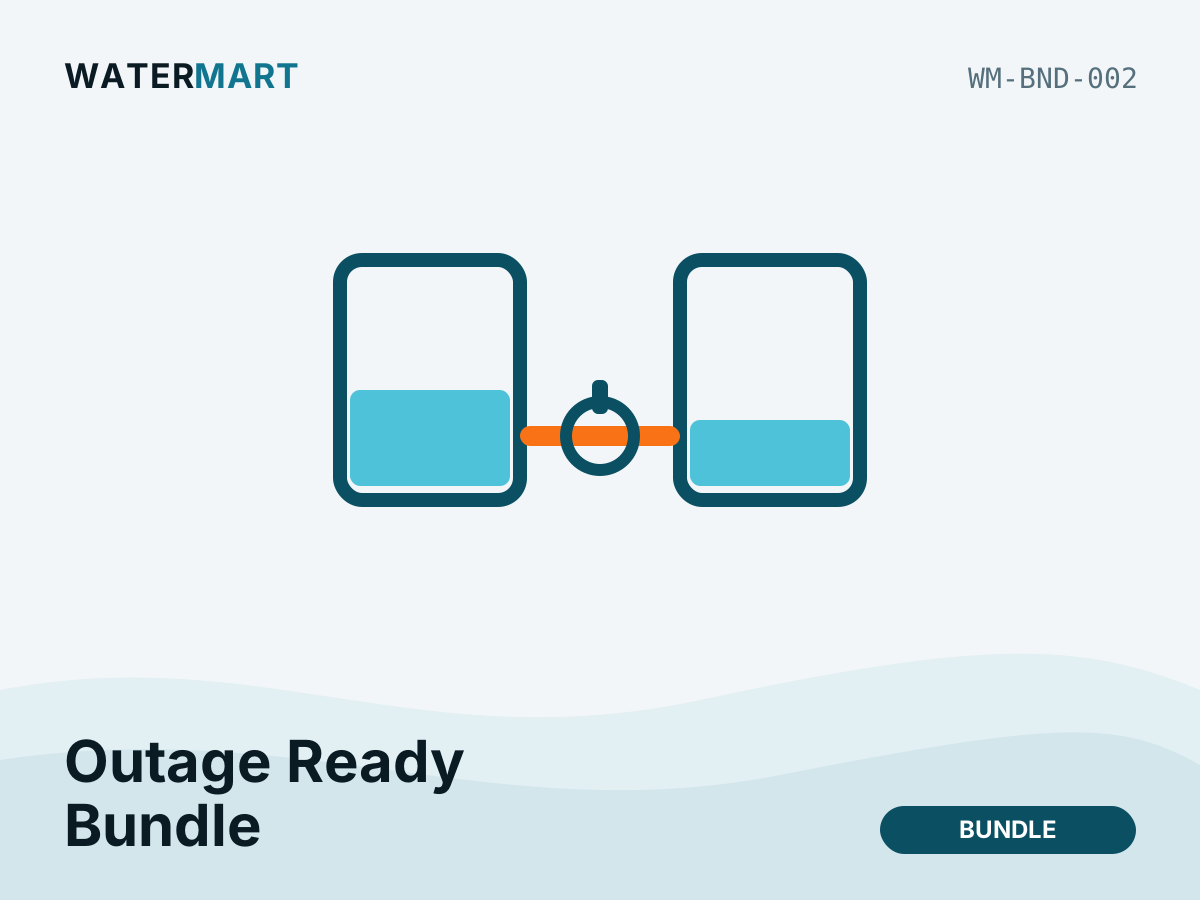
Protect the pump while you’re at it. Typical tank booster pumps (0.37–0.75kW) rely on the water moving through them to keep their seals cool; run one against an empty tank and it can wreck itself in minutes. A float switch that cuts the pump before the tank empties is the cheapest insurance in this whole guide. And if you’d rather not shop line-by-line before the next notice, the Outage Ready Bundle puts the essentials in one order.
Outage cover in one box
What should you do after the water comes back?
- Let the first water run to waste. Re-pressurised mains stir up sediment. Run the outside tap until it’s clear before filling kettles or letting it into the tank.
- Expect a stronger chlorine smell. After coliform detections in 2026, municipalities added extra chlorination — that’s the system erring on the side of caution, and the smell fades.
- Watch for discoloured water for a day or two. Brown or milky water should clear as the network settles. If it doesn’t, report it and hold off drinking it.
- Re-test before you trust it. Strip-test the tap and the tank, and start a fresh 24–48 hour bacteria test if the tank ran low or was opened.
- Refill immediately. The next notice won’t wait for your tank to recover. Reopen the float valve feed and confirm the level actually climbs.
Honest note: home test strips and bacteria kits are screening tools, not SANAS-accredited lab results. They flag obvious trouble quickly and cheaply, but if you need a compliance-grade answer — a rental property, a vulnerable family member, a borehole feeding the whole house — send a sample to an accredited lab and test against SANS 241, South Africa’s national drinking-water standard.
Which permanent upgrades give the most value per rand?
Ranked by how much outage pain they remove per rand spent:
| Rank | Upgrade | WaterMart option | Price | Why it earns the spot |
|---|---|---|---|---|
| 1 | Level visibility | Mechanical Dial Tank Level Gauge | R399 | Every outage decision starts with “how many litres do we have?” |
| 2 | Gravity tap point | Tank-to-Tap Gravity Feed Kit 25mm | R349 | Water that flows with no pump and no Eskom |
| 3 | Testing kit | 17-in-1 Home Water Test Kit | R329 | Know what you’re storing before you have to drink it |
| 4 | Leak alarm | WiFi Leak Detector Puck | R249 | A slow leak found mid-outage is the worst-timed leak there is |
On level visibility, shop around before defaulting to the tank brand’s own accessories: JoJo’s range runs from R664 for a mechanical indicator to R845 for a dial gauge and R4 999 for its IoT monitor, and Builders lists an indicator at R1 397 that was out of stock when we checked in July 2026. Our R399 dial gauge covers the walk-outside-and-glance job; the R1 099 WiFi Ultrasonic Tank Level Sensor adds live litre readings and low-level alerts on your phone — the difference between hearing about an empty tank and seeing it coming.
See your level before the outage does
FAQ
How much drinking water should we store per person?
Enough for drinking and cooking through the published outage plus a full buffer day — outages regularly overrun their slot. Keep it in clean, sealed bottles, separate from washing and flushing water, so nobody borrows it for the dishes.
Can we drink the tank water during an outage?
Tank water is fine for washing and flushing as-is. For drinking, either test first — strips for the basics, plus a bacteria test started 48 hours ahead — or simply boil it. If the answer has to be provably safe, that’s a SANS 241 lab test, not a strip.
Will a long outage damage my pump?
The outage itself won’t; running dry will. A pressure-controlled pump can keep trying to draw from an empty tank until it overheats. A R249 float switch cuts the power before that happens, so the pump never gets the chance to cook itself.
Will these fittings fit my JoJo tank?
Yes. South African tanks use BSP threads, and the standard JoJo bottom outlet is 40mm. Our kits and connectors cover the common 20, 25, 32 and 40mm sizes — match the size, not the brand.
WaterMart launches in August 2026 and everything in this checklist is on the waitlist now — join it and you’re first in the queue the day we open. We’re Pretoria-based, courier nationwide at R85 flat (free over R950), and all prices include VAT. The next 54-hour notice should cost you a shrug, not a scramble.